
A Catholic Framework for Economic Life
from the "Evangelization & Culture" journal

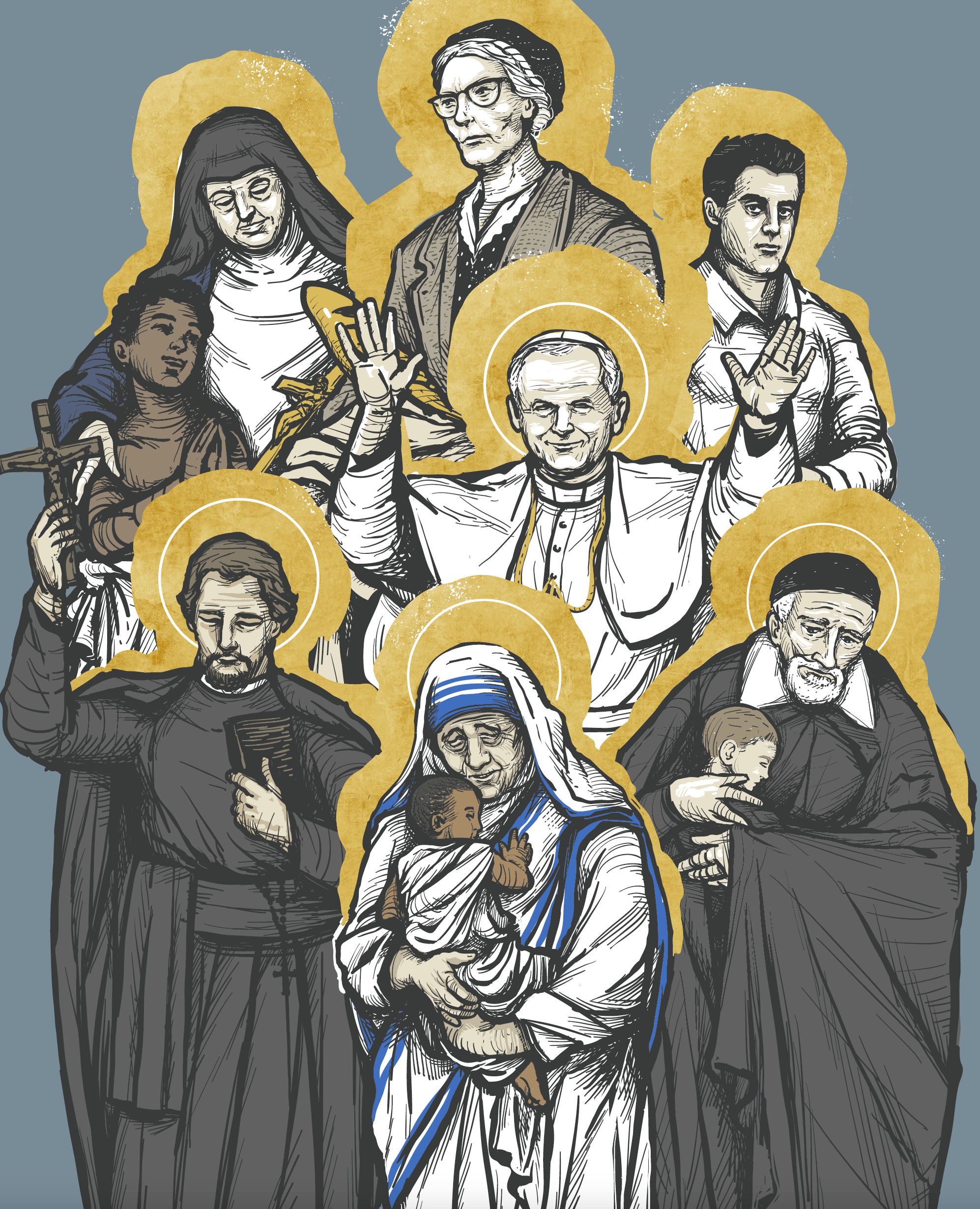
This essay first appeared in issue 2 (Winter 2019) of the Evangelization & Culture journal, available with a Word on Fire Institute subscription, on the theme of Economics. Art by Chris Lewis.
One of the great trajectories of Scripture is God’s burning desire for economic justice. Any attempt to distance revelation from this desire has to face down a deluge of passages joining the two. Four of the five books of the Pentateuch speak directly to justice, including Deuteronomy: “For the Lord your God is God of gods and Lord of lords. . . . who executes justice for the orphan and the widow, and who loves the strangers, providing them food and clothing” (Deut. 10:17-18).
This deep concern in the Law for justice—especially for the weak, the poor, and the oppressed—intensifies in the Psalms and the prophets. The word “justice” appears no less than twenty-five times in Isaiah, beginning with: “Seek justice, rescue the oppressed, defend the orphan, plead for the widow” (Isa. 1:17). Christ—the God of Israel incarnate—fulfills rather than abolishes this desire, bringing it to a fever pitch in his radical identification with those afflicted by injustice: “Just as you did it to one of the least of these who are members of my family, you did it to me” (Matt. 25:40).
As Bishop Barron has observed, this theme came roaring out of the Bible and right into the early centuries of Christian tradition. And the Catholic Church, building on both Sacred Scripture and Tradition, has long embraced the work of justice. The Catechism declares: “In economic matters, respect for human dignity requires . . . the practice of the virtue of justice, to preserve our neighbor’s rights and render him what is his due.”1 But what exactly does it mean to “render what is due” to our neighbor—the classical definition of justice—in economic matters today?
In 1996, the United States Conference of Catholic Bishops issued “A Catholic Framework for Economic Life” to guide Catholics in navigating these questions. Drawing on the Catechism, papal encyclicals, and the pastoral letter “Economic Justice for All,” the Framework offers ten principles to assist American Catholics—not only as “followers of Jesus Christ” but also as “participants in a powerful economy”—in seeking economic justice.
In the ensuing pages, we present and reflect on each of these principles. And in light of the Word on Fire movement’s rootedness in the Mystical Body, each reflection centers on a saintly figure who embodied that particular principle in their lives, glorifying the God of justice and inspiring us to do the same.
PRINCIPLE No. 1
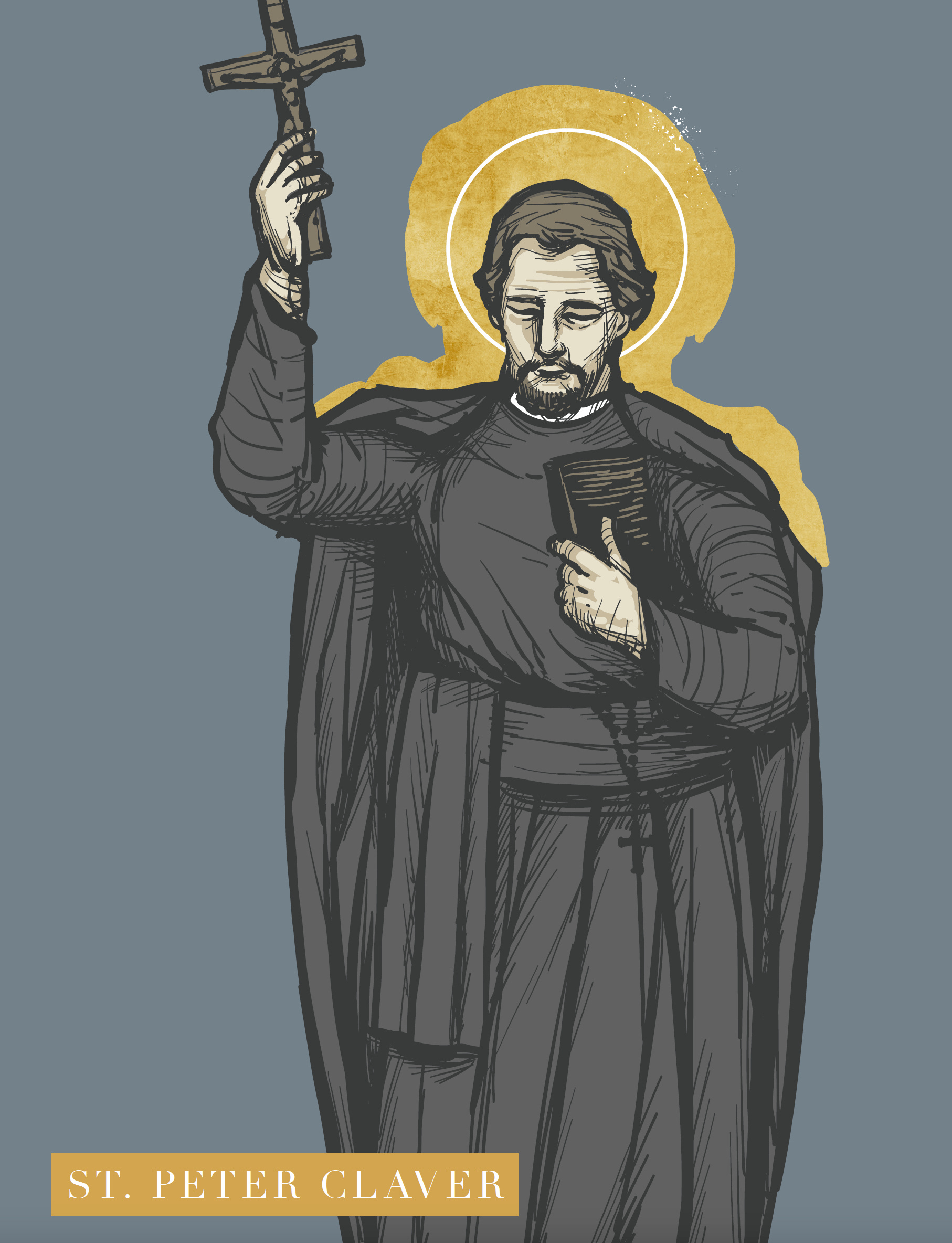
The economy exists for the person, not the person for the economy.
In Rerum Novarum, an 1891 encyclical on capital and labor and a foundational text of modern Catholic social teaching, Pope Leo XIII declares that employers are “not to look upon their work people as their bondsmen, but to respect in every man his dignity as a person ennobled by Christian character.”2 In other words, our inherent value as human beings demands that we never be treated as mere servants (or “bondsmen”) of business. As John Paul II put it in Laborem Exercens: “Work is ‘for man’ and not man ‘for work.’”3
History bears witness to just how dreadful the consequences of denying this first principle can be. Just twenty-eight years before Rerum Novarum, Abraham Lincoln was declaring the freedom of over three million slaves in the United States who—along with countless persons before them—were treated as property for economic gain. But in this dark history of brutality and degradation, we also find a shining example of the Church’s teaching in St. Peter Claver, “the slave of the slaves,” who was canonized by Pope Leo himself. Claver arrived as a missionary in 1610 on the shores of Colombia, where he was ordained as a Jesuit. For decades he passionately ministered to the slaves there: he rushed out to greet them on the slave ships, offering them food, drink, and medicine; he taught himself their language and instructed them in the faith; he baptized them—by some estimates, over 300,000—and regularly heard their confessions; and he visited them on the plantations to see that their spiritual and physical needs were met. As Brandon Vogt explains in Saints and Social Justice, St. Peter Claver expressed to the slaves “that they were not merely property, bartering objects, or cheap sources of labor,” but “invaluable sons and daughters of God, deeply loved and divinely dignified.”4
The abolitionist movement has thankfully changed the course of history. But even today, people are degraded for monetary gain—especially in the shadows of society, where the pornography industry, human trafficking, sexual slavery, forced labor, and the exploitation of children wreak untold havoc.
Like St. Peter Claver, may we fight to keep human beings from being treated as mere means to financial ends.
PRINCIPLE No. 2
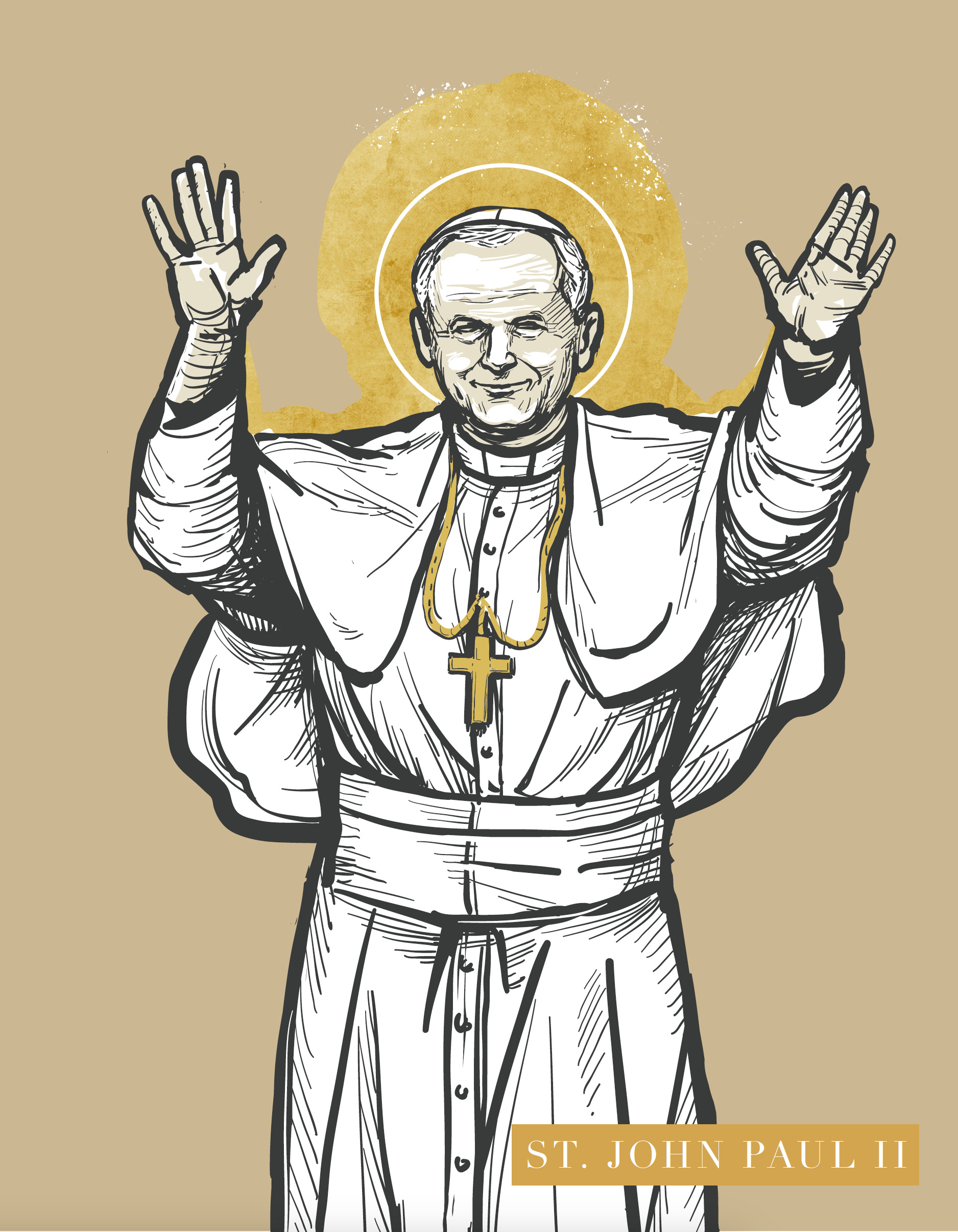
All economic life should be shaped by moral principles. Economic choices and institutions must be judged by how they protect or undermine the life and dignity of the human person, support the family, and serve the common good.
“Profit is a regulator of the life of a business,” Pope John Paul II wrote in Centesimus Annus, which celebrates the one hundredth anniversary of Rerum Novarum. “But it is not the only one; other human and moral factors must also be considered.”5 The life and dignity of the person, support for the family, and service of the common good, which “concerns the life of all”6 and for which “civil society exists,”7 has to shape economics. When it doesn’t—when business sees itself as autonomous and even absolute—economic freedom ends up “alienating and oppressing” the human person.8
From his early days as an underground seminarian in Kraków to his last days suffering from Parkinson’s disease in the public eye, these were abiding themes of Saint John Paul II’s life, and their application to economics a key effort of his pontificate. In Evangelium Vitae, he writes that all have a responsibility to develop “cultural, economic, political and legislative projects” that will build “a society in which the dignity of each person is recognized and protected and the lives of all are defended and enhanced.”9 In Familiaris Consortio, he observes that many young people do not marry “because of extreme poverty deriving from unjust or inadequate social and economic structures,” and encourages guaranteeing “a family wage” and “creating opportunities for work and life.”10 And the Compendium of the Social Doctrine of the Church, which he commissioned, declares: “The State has the moral obligation to enforce strict limitations only in cases of incompatibility between the pursuit of common good and the type of economic activity proposed or the way it is undertaken.”11
There are many today who want to isolate and exaggerate our economic freedom; they push to liberate the market of any moral constraint and to reduce its aim to monetary success.
Like Saint John Paul II, may we see that true freedom is to be found in God, and refuse to separate the world of commerce from the soul, the family, and the common good.
PRINCIPLE No. 3
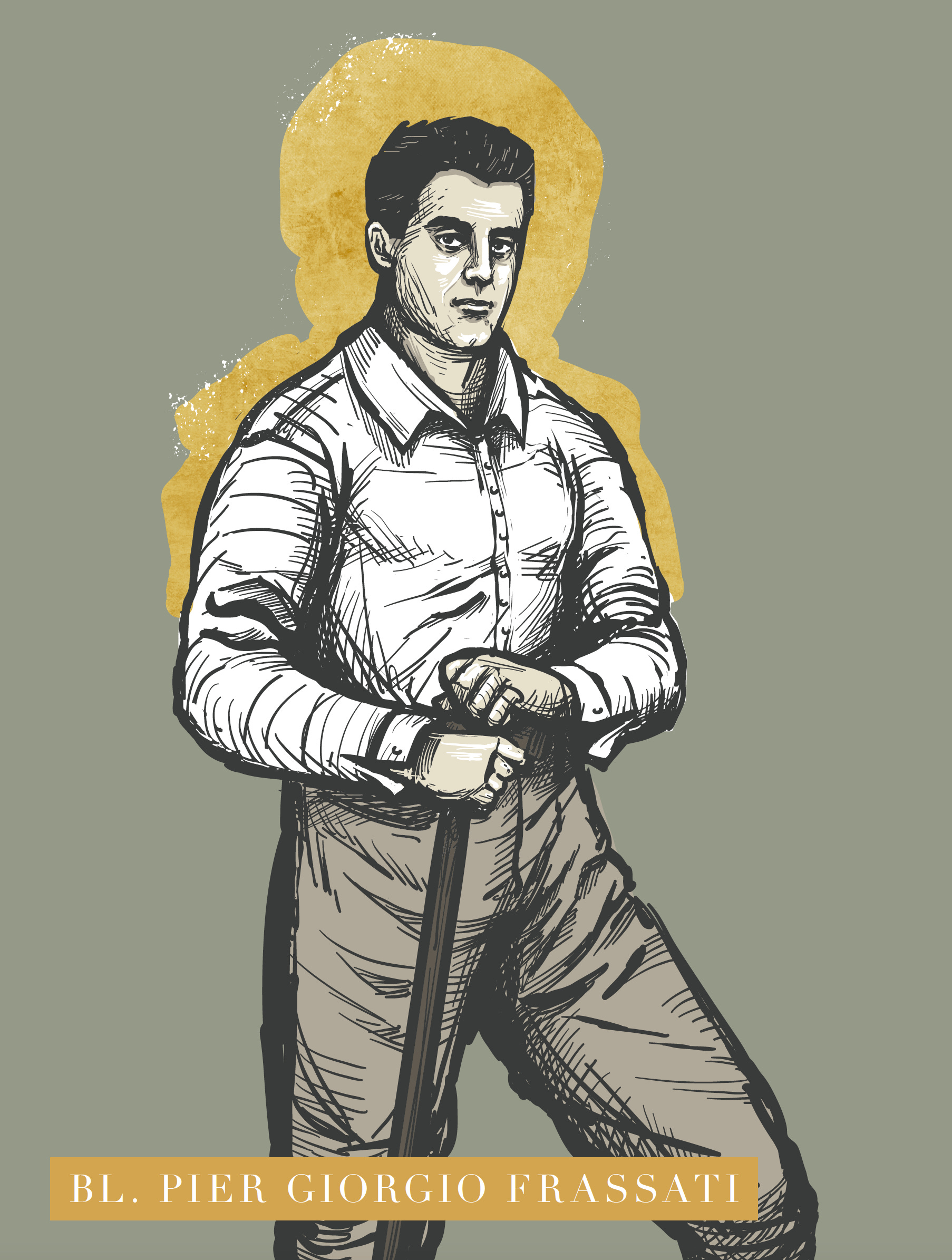
A fundamental moral measure of any economy is how the poor and vulnerable are faring.
In his encyclical Deus Caritas Est, Pope Benedict XVI said that the Church has a three-fold responsibility: to evangelize, to worship God, and to care for the poor. The Catechism affirms that the Church’s love for the poor is “a part of her constant tradition,”12 and that the poor “are the object of a preferential love on the part of the Church.”13 St. John Chrysostom, an early Church Father, was especially fiery on the subject: “Not to enable the poor to share in our goods is to steal from them and deprive them of life.”14 But this is not simply a summons to personal charity. Benedict goes on to write that the Church “cannot and must not remain on the sidelines in the fight for justice.” We must, as the Compendium teaches, combat those “structures of sin” which “generate and perpetuate poverty.”15
So many figures in the Church’s history beautifully model its love for the poor, but one with special significance today is the layman Blessed Pier Giorgio Frassati. An energetic young man born in 1901 to wealthy parents in Italy, Pier Giorgio lived a vigorous life filled with partying, pipe-smoking, and mountain-climbing. But he also was deeply spiritual—and deeply committed to the poor. “Jesus comes to me every morning in Communion,” he once said, “and I return the visit by going to serve the poor.”16 A member of the St. Vincent de Paul Society, Pier Giorgio personally cared for the homeless, the jobless, and the destitute; he donated his own money to the Society; and he literally gave the coat off of his back and the shoes off his feet to those in need. But as Vogt points out, he also focused many of his activities, from newspapers to politics, on institutional justice. “Charity is not enough,” he would say. “We need social reform.’”17
Economists tend to look at large-scale trade deals and disruptive innovations in terms of how they impact business and government. But how are they impacting the poor—or generating new forms of poverty?
Like Blessed Pier Giorgio Frassati, may we ground our lives more firmly in the Eucharist so as to turn them more often toward the poor.
PRINCIPLE No. 4
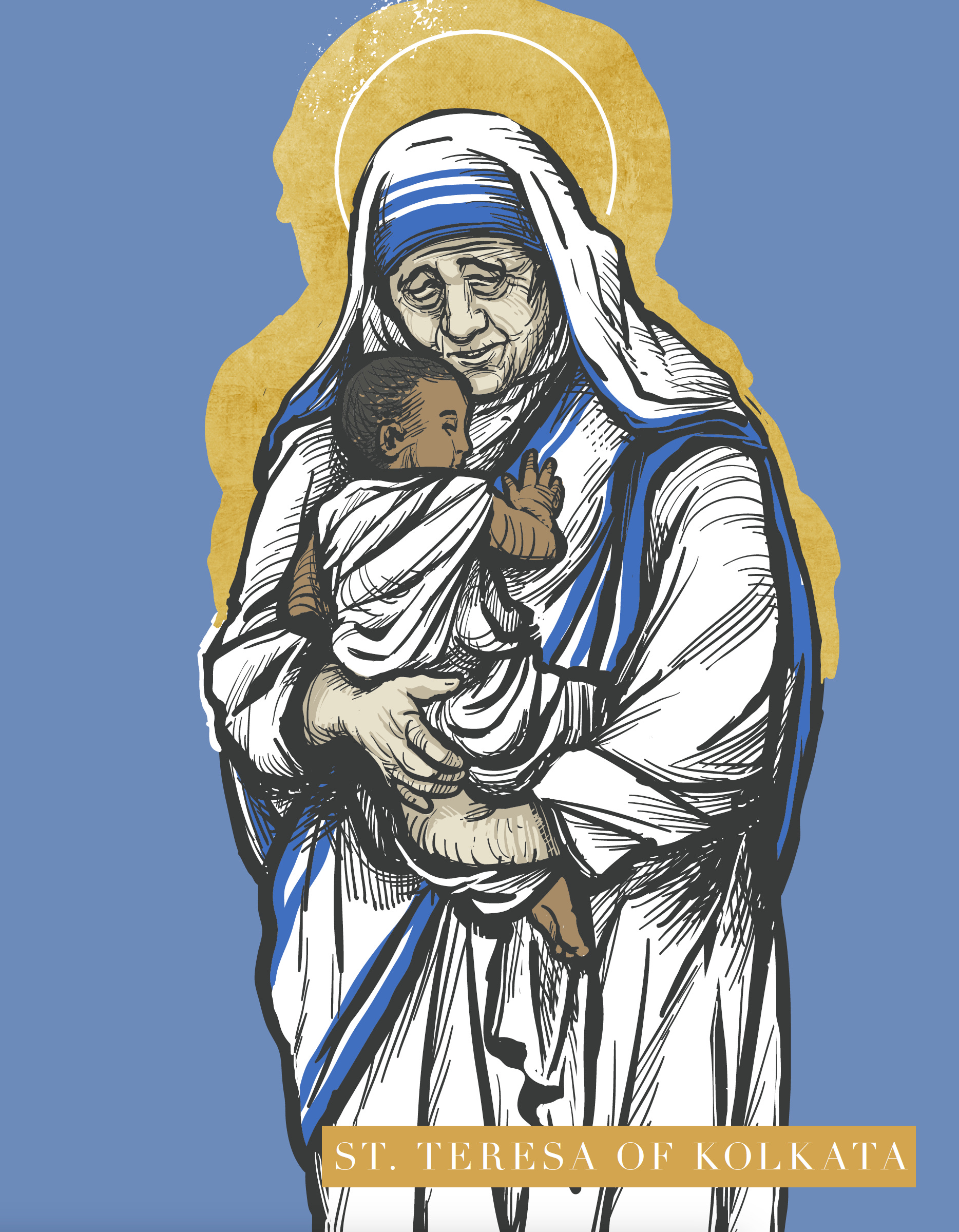
All people have a right to life and to secure the basic necessities of life (e.g., food, clothing, shelter, education, health care, safe environment, economic security).
The Catechism teaches that “concern for the health of its citizens requires that society help in the attainment of living-conditions that allow them to grow and reach maturity: food and clothing, housing, health care, basic education, employment, and social assistance.”18 But a necessary condition for all of these rights is life itself—and therefore, the foundational right of all human beings is the right to life, “from conception to natural death.”19 In his encyclical Pacem in Terris, Pope John XXIII enumerates a list of human rights, including food and medical care. But above all he declares: “Man has the right to live.”20
St. Teresa of Kolkata—one of the four female saints highlighted by Bishop Barron in The Priority of Christ and Episode 9 of the CATHOLICISM series—captures this principle perhaps more than any other figure in modern history. Born Agnes Gonxha Bojaxhiu in Skopje, Macedonia, young Agnes felt called to the religious life and left home in 1928 at the age of eighteen to answer the call. But she would later hear a “call within a call”: to serve the poorest of the poor in Kolkata, India as a Missionary of Charity, offering the basic necessities of life to those most in need. In spite of great darkness and loneliness, Mother Teresa went on to become one of the most celebrated Catholics in the world, even winning the Nobel Peace Prize in 1979. And as Bishop Barron notes, her speech spoke of much more than just poverty. “To the surprise of many outside the Church, she used her Nobel speech as an occasion to decry abortion as the greatest enemy of peace in contemporary society.”21
Our social and political landscape is fiercely divided between those who fight against abortion, euthanasia, and assisted suicide, and those who fight against homelessness, hunger, and lack of health care.
Like St. Teresa of Kolkata, may we fight for both the right to the basic necessities of life and the foundational right to life itself.
PRINCIPLE No. 5
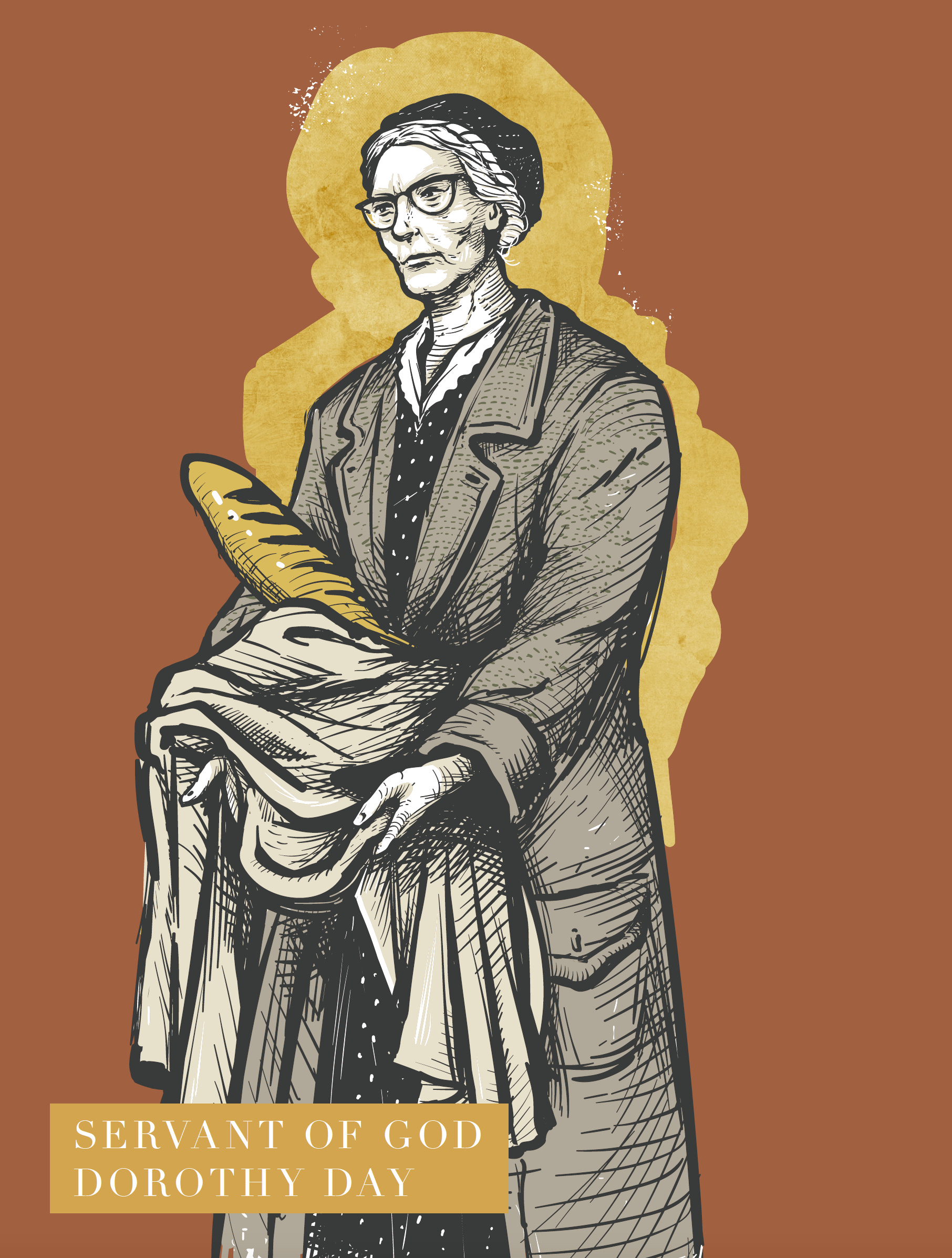
All people have the right to economic initiative, to productive work, to just wages and benefits, to decent working conditions, as well as to organize and join unions or other associations.
On the first page of Rerum Novarum, Pope Leo XIII writes that, after the abolishing of working guilds, workers “have been surrendered, isolated and helpless, to the hardheartedness of employers and the greed of unchecked competition.”22 The encyclical, which was a major impetus behind the labor movement, goes on to discuss working people’s “hope and possibility” of bettering their condition in life;23 their “natural right to procure what is required in order to live” through work;24 the necessity of the “aid and authority of the law” when working conditions are “repugnant to their dignity as human beings”;25 and the importance of labor unions, which “exist of their own right.”26
Rerum Novarum had a profound impact on the life of a French thinker and vagabond named Peter Maurin, who longed to make “the kind of society where it is easier for people to be good.”27 In December of 1932, Maurin knocked on the door of the social activist and Catholic convert Dorothy Day—and a movement was born. The two launched The Catholic Worker, a paper promoting the Church’s social teachings that was (and still is) sold for just one penny, and grew into “houses of hospitality” serving the poor all over the world. Day advocated for a range of issues from distributism to pacifism, but at the heart of her mission was the rights of laborers—to receive just wages, to unionize, and to strike. Maurin passed away in 1949—on the anniversary of Rerum Novarum—and later that year, Day proclaimed: “We believe in an economy based on human needs rather than on the profit motive. . . . We want land, bread, work, children, and the joys of community in play and work and worship.”28
Even in the wake of the labor movement, countless souls are still deprived of the dignity of work, or subjected to unjust wages or conditions or exploitation—once again, especially in society’s shadows.
Like the Servant of God Dorothy Day, may we strive to protect the rights of workers—not only the right to work itself, but to work that is just and good.
PRINCIPLE No. 6
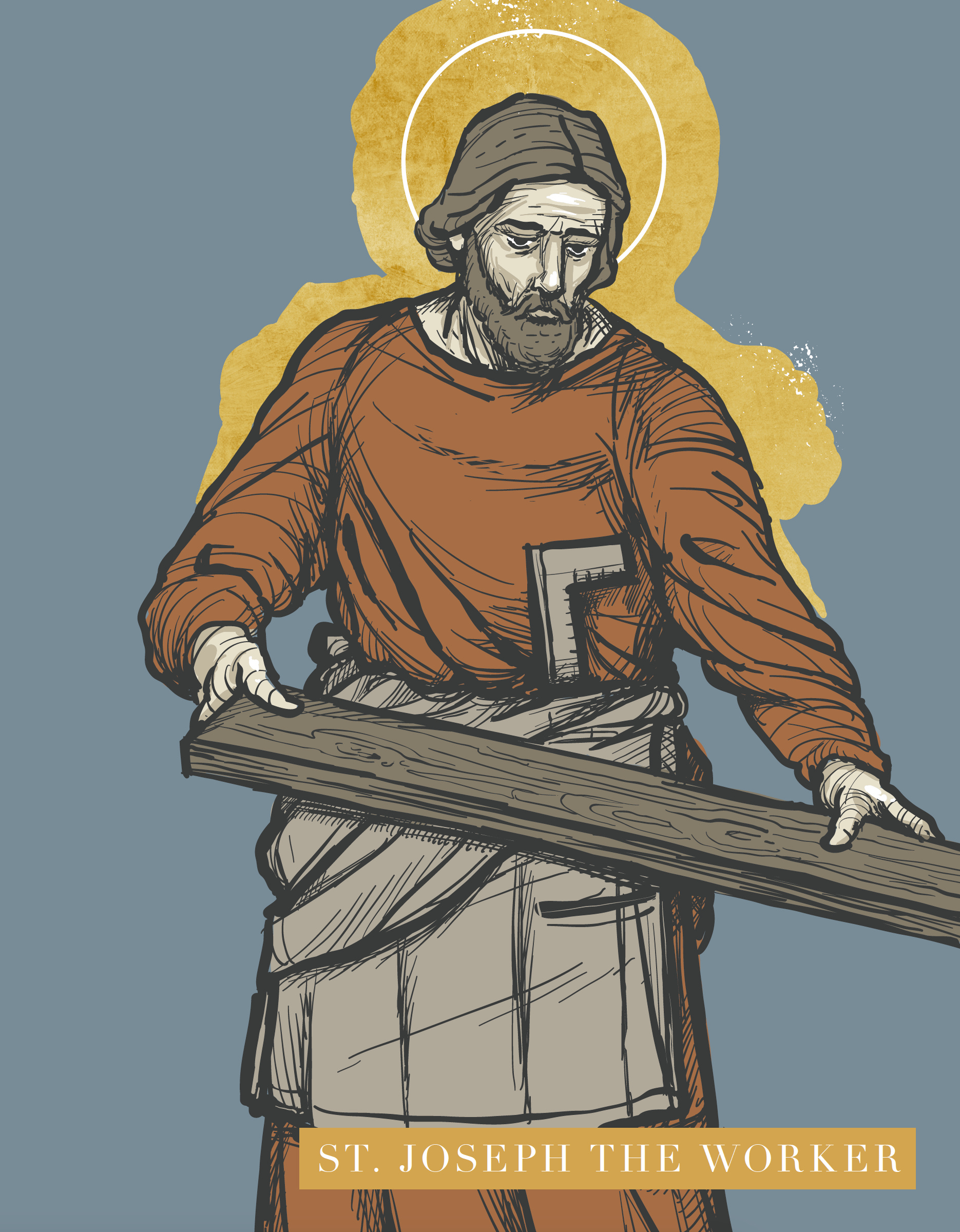
All people, to the extent they are able, have a corresponding duty to work, a responsibility to provide for the needs of their families, and an obligation to contribute to the broader society.
Catholic social teaching on the economy articulates our responsibilities as well as rights. “Human work,” the Catechism teaches, “proceeds directly from persons created in the image of God and called to prolong the work of creation . . . Hence work is a duty.”29 In his 1981 encyclical on work, John Paul II says, “Man must work out of regard for others, especially his own family, but also for the society he belongs to, the country of which he is a child, and the whole human family of which he is a member.”30 Work, he adds, was given particular prominence by Christ, who “was himself a man of work, a craftsman like Joseph of Nazareth.”29
St. Joseph, the Patron of the Universal Church, is also in a special way the patron saint of workers and a model of our duty to work. In an encyclical on St. Joseph, Pope Leo XIII writes: “As to workmen, artisans, and persons of lesser degree, their recourse to Joseph is a special right, and his example is for their particular imitation. For Joseph . . . passed his life in labor, and won by the toil of the artisan the needful support of his family.”31 In fact, not a single word from St. Joseph is recorded in Scripture—and as Fr. Steve Grunow observes, this silence “speaks louder than any words.”32 Joseph the carpenter not only accepted from God the humble responsibility of sweating for his spouse and child; he completely disappeared into this mission. And his life and patronage demonstrate what rich fruit such ordinary work can yield—not only for a family but for the whole human community.
Too many eschew the duty of labor—especially menial labor—expecting the economy to give goods to them without ever humbly, diligently, or regularly giving of themselves.
Like St. Joseph the Worker, may we humbly embrace, to the extent that we are able, our own duty to work, and encourage a positive work ethic in our families.
PRINCIPLE No. 7 | ST. MATTHEW
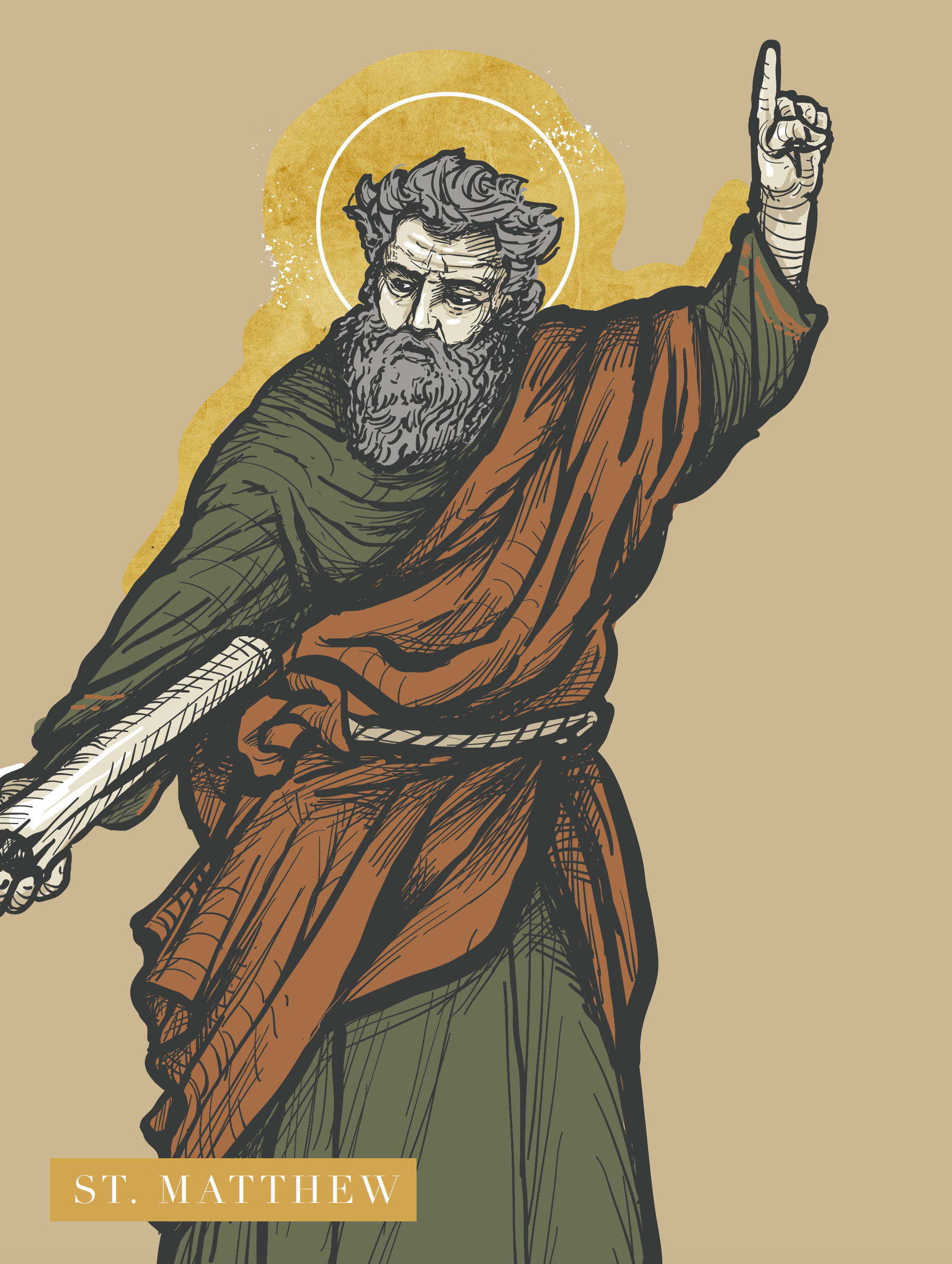
In economic life, free markets have both clear advantages and limits; government has essential responsibilities and limitations; voluntary groups have irreplaceable roles, but cannot substitute for the proper working of the market and the just policies of the state.
The Church has long recognized the importance of voluntary groups for economic justice; however, it also recognizes the proper ordering of the market and the state. The Church is in favor of property, profits, and other engines of economic activity; however, it also recognizes their limits. “Economic activity, conducted according to its own proper methods, is to be exercised within the limits of the moral order, in keeping with social justice so as to correspond to God’s plan for man.”33 Likewise for the state: “Political authority must be exercised within the limits of the moral order and must guarantee the conditions for the exercise of freedom.”34
If you work in the world of business and finance—accounting, banking, taxes, etc.—you have a patron in St. Matthew, one of Jesus’ twelve Apostles. But Matthew was as much a governmental figure as an economic one. He was employed by the occupying Roman force to collect taxes in Capernaum, which probably resulted in a good deal of hostility from his fellow Jews. He was, in short, the avatar of financial matters and positive law. But all three Synoptic Gospels testify to Matthew’s sudden and stunning conversion: Christ sees him and says to him, “Follow me”—and he rises and follows. The moment of overwhelming surprise is beautifully captured by Caravaggio in his famous painting—although some insist that it captures the moment just before the conversion, and that Matthew is in fact the young man at the end of the table with his eyes still cast down on his money. Either way, the message is clear: the narrow interests of wealth and power have their limits. There is a deeper call to heed, a greater horizon to follow—and all we have to do is respond.
Many on the political right today advocate an unleashing of the market while radically restricting government intervention; others on the political left advocate an unleashing of government while radically restricting the free market.
Like St. Matthew, may we accept the advantages of both the market and the state, but also realize their limits—and the moral and spiritual truths beyond them.
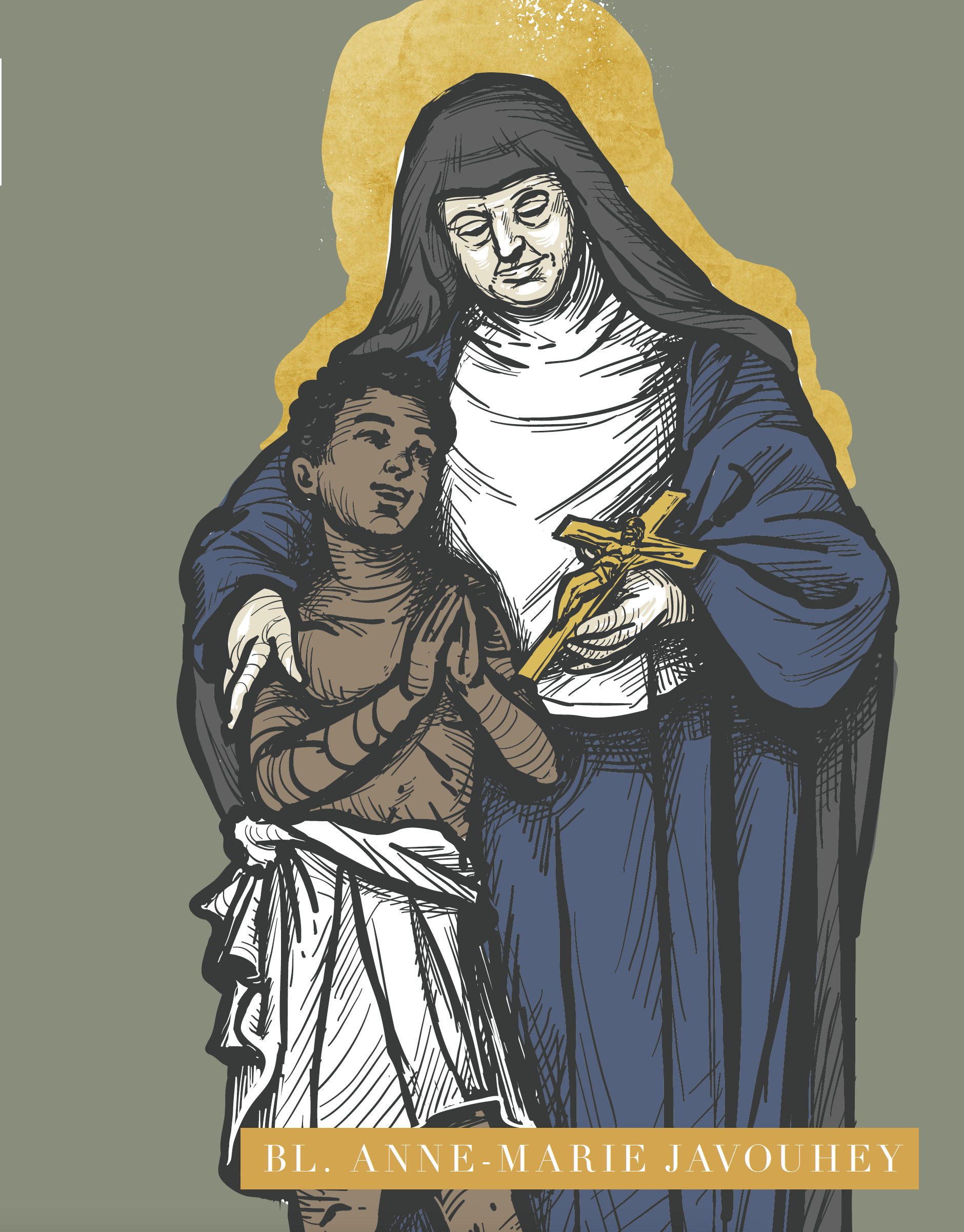
PRINCIPLE No. 8 | BL. ANNE-MARIE JAVOUHEY
Society has a moral obligation, including governmental action where necessary, to assure opportunity, meet basic human needs, and pursue justice in economic life.
While the power of the state has clear limits, it also has equally clear responsibilities. “The richer class have many ways of shielding themselves, and stand less in need of help from the state,” Leo writes in Rerum Novarum, “whereas the mass of the poor have no resources of their own to fall back upon, and must chiefly depend upon the assistance of the state. And it is for this reason that wage-earners, since they mostly belong in the mass of the needy, should be specially cared for and protected by the government.”35 The state, the Catechism teaches, should also assist in “overseeing and directing the exercise of human rights in the economic sector.”36
Born shortly before the French Revolution in 1779, Blessed Anne-Marie Javouhey’s life was marked by collaboration with the government to promote education in France and around the world. It began in 1800, when she woke to a vision of children of different races filling her room. Among them she saw St. Teresa of Avila, who declared them to be “the children God has given you.”37 She understood her mission: to help others—especially children—break free from the bonds of poverty through education. She got to work, securing support from the local government to establish several schools and later co-founding a religious order. Her efforts caught the attention of the French and British governments, who asked for the sisters’ help in educating recently freed slaves in African colonies. The French government then asked her to sail to French Guiana in South America, where there had been issues with crime and disease. There she established a safe and smoothly functioning colony—with religious, residential, agricultural, and educational elements—helping hundreds of slaves transition out of bondage and into freedom.
Our moral obligation to meet basic needs and work for greater justice does not exclude government action, which has played a necessary role in everything from labor rights, to civil rights, to rights for people with disabilities.
Like Bl. Anne-Marie Javouhey, may we not separate our desire for God’s justice from those political efforts that help to manifest it.
PRINCIPLE No. 9
Workers, owners, managers, stockholders and consumers are moral agents in economic life. By our choices, initiative, creativity, and investment, we enhance or diminish economic opportunity, community life, and social justice.
The emphasis on solidarity—a broader social commitment to justice—in no way diminishes the other major pillar of Catholic social teaching: subsidiarity. Individuals and local organizations have a critical role to play as the first line of defense against injustice, and the Catechism teaches that “it is necessary that all participate, each according to his position and role, in promoting the common good.”38 In fact, the “primary responsibility” for overseeing and directing economic rights belongs not to the state “but to individuals and to the various groups and associations which make up society.”39
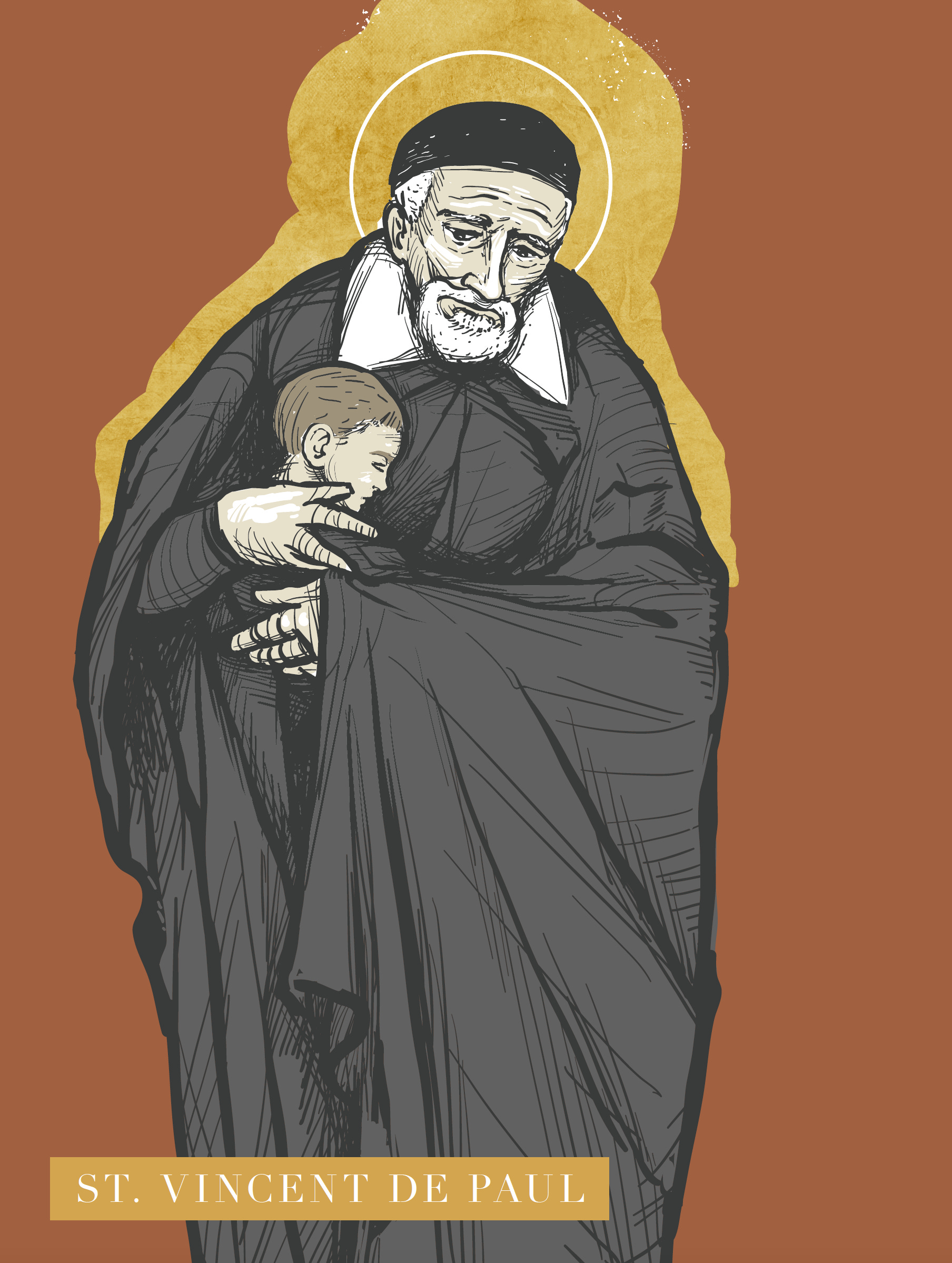
“We are the Society of Friday night pizzas and Monday morning mercy.”40 So begins a powerful video dedicated to the work of the Society of St. Vincent de Paul—the same Catholic charitable organization to which Pier Giorgio belonged. The Society takes its name from a priest born to peasant farmers in France in 1581. Vincent de Paul served as chaplain in a Parisian palace, but soon came to dedicate his life to serving the poor. He helped laborers and peasants, formed charitable groups to serve poor families, and organized a group of wealthy women in Paris to help fund missionary projects, found hospitals, and ransom twelve hundred North African slaves. Long after his death in 1833—around the same time Bl. Anne-Marie Javouhey was serving in South America—a group of students led by Bl. Frédéric Ozanam founded a society of laypeople to help carry on Vincent’s legacy. The Society of St. Vincent de Paul now has a presence in 153 countries and an estimated 800,000 members.
“The economy” can feel like an overwhelmingly big and abstract reality, one moved by massive governmental and social forces that swallow up the choices of a single owner, worker, or consumer.
Like St. Vincent de Paul and the lay members of his Society, may we act on our potential to be agents of great good, and seize on local opportunities for social justice.
PRINCIPLE No. 10
The global economy has moral dimensions and human consequences. Decisions on investment, trade, aid, and development should protect human life and promote human rights, especially for those most in need wherever they might live on this globe.
While the first nine principles explore the local and national dimensions of economic life, the tenth and final principle emphasizes its global implications. “The unity of the human family,” the Catechism teaches, “embracing people who enjoy equal natural dignity, implies a universal common good,” one which calls for “assisting migrants and their families.”41 In Mater et Magistra, Pope Saint John XXIII says that an “international” common good requires “the avoidance of all forms of unfair competition between the economies of different countries” and the “effective co-operation in the development of economically less advanced communities.”42 He also references “the right of families to migrate” and the need for countries to share in the “welfare of man.”43
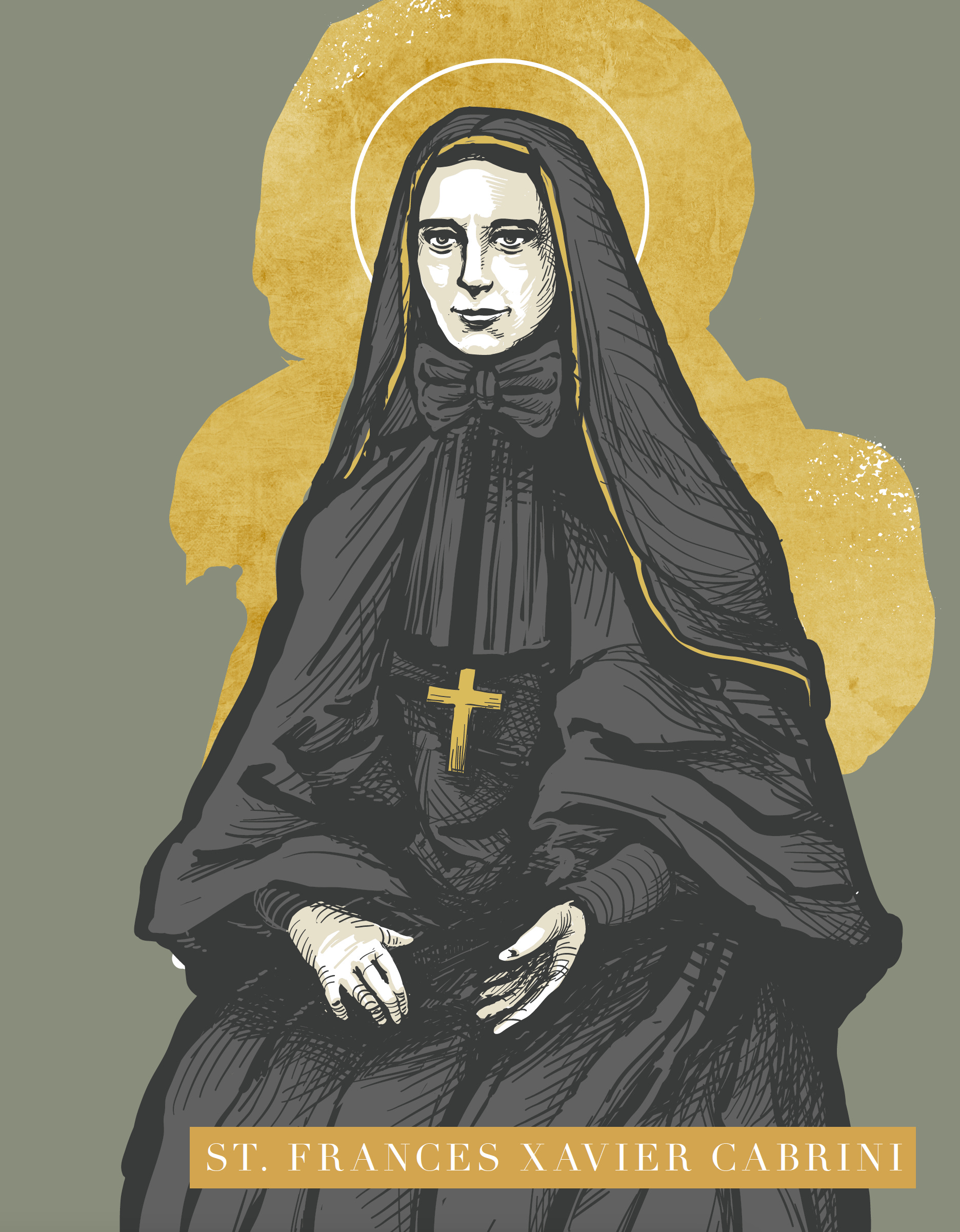
The first citizen of the United States to be canonized a saint—with a shrine in New York City containing her remains—was an immigrant who exemplifies this very principle. Born two months premature in the Lombardy region of Italy in 1850, Frances Cabrini was initially turned away from religious life for being too frail, but eventually took religious vows in 1877, adopting the name “Xavier” in honor of the great Jesuit missionary. She felt called to missionary work in China, but Pope Leo XIII told her to go “west not east,” sending her to New York City in 1889—just two years before Rerum Novarum. There she and six of her Missionary Sisters of the Sacred Heart of Jesus served the poor Italian immigrant population, organizing orphanages, schools, and classes for adults. Despite a great fear of water, she continued to cross oceans and established sixty-seven institutions around the world, and is today invoked as the patron saint of immigrants.
A country has a right to defend its borders and enforce its laws; however, in many nations today—including our own—there has been an alarming rise in unjust indifference and dehumanizing hostility toward immigrants, refugees, and developing countries.
Like St. Frances Xavier Cabrini, may we not restrict economic justice to our neighbors or fellow citizens, and attend to the rights and needs of immigrants from—and inhabitants of—other nations of the world.
Catechism of the Catholic Church, 2407.
Pope Leo XIII, Rerum Novarum, 20, encyclical letter, Vatican website, May 15, 1891, http://w2.vatican.va/content/leo-xiii/en/encyclicals/documents/hf_l-xiii_enc_15051891_rerum-novarum.html.
Pope John Paul II, Laborem Exercens, 6, encyclical letter, Vatican website, September 14, 1981, http://w2.vatican.va/content/john-paul-ii/en/encyclicals/documents/hf_jp-ii_enc_14091981_laborem-exercens.html.
Brandon Vogt, Saints and Social Justice: A Guide to Changing the World (Huntington, IN: Our Sunday Visitor, 2014), 33.
Pope John Paul II, Centesimus Annus, 35, encyclical letter, Vatican website, May 1, 1991, http://w2.vatican.va/content/john-paul-ii/en/encyclicals/documents/hf_jp-ii_enc_01051991_centesimus-annus.html.
Catechism of the Catholic Church, 1907.
Rerum Novarum, 51.
Centesimus Annus, 39.
Pope John Paul II, Evangelium Vitae, 89, encyclical letter, Vatican website, March 25, 1995, http://w2.vatican.va/content/john-paul-ii/en/encyclicals/documents/hf_jp-ii_enc_25031995_evangelium-vitae.html.
Pope John Paul II, Familiaris Consortio, 81, encyclical letter, Vatican website, November 22, 1981, http://w2.vatican.va/content/john-paul-ii/en/apost_exhortations/documents/hf_jp-ii_exh_19811122_familiaris-consortio.html.
Compendium of the Social Doctrine of the Church, 336, Vatican website, June 29, 2004, http://www.vatican.va/roman_curia/pontifical_councils/justpeace/documents/rc_pc_justpeace_doc_20060526_compendio-dott-soc_en.html.
Catechism of the Catholic Church, 2444.
Catechism of the Catholic Church, 2448.
Catechism of the Catholic Church, 2446.
Compendium of the Social Doctrine of the Church, 332.
Maria Di Lorenzo, Blessed Pier Giorgio Frassati: An Ordinary Christian, trans. Robert Ventresca
(Boston: Pauline Books and Media, 2004), 73.
Vogt, Saints and Social Justice, 80.
Catechism of the Catholic Church, 2288.
Evangelium Vitae, 93.
Pope John XXIII, Pacem in Terris, 11, encyclical letter, Vatican website, April 11, 1963, http://w2.vatican.va/content/john-xxiii/en/encyclicals/documents/hf_j-xxiii_enc_11041963_pacem.html.
Robert Barron, Catholicism: A Journey to the Heart of the Faith (New York: Image Books, 2011), 221.
Rerum Novarum, 3.
Rerum Novarum, 5.
Rerum Novarum, 44.
Rerum Novarum, 36.
Rerum Novarum, 49.
Dorothy Day, “On Pilgrimage,” The Catholic Worker, February 1951, https://www.catholicworker.org/dorothyday/articles/910-plain.htm.
Dorothy Day, “Beyond Politics,” The Catholic Worker, November 1949, http://dorothyday.catholicworker.org/articles/166.html.
Catechism of the Catholic Church, 2427.
Laborem Exercens, 16.
Laborem Exercens, 26.
Fr. Steve Grunow, “The Loud Silence of St. Joseph,” Word on Fire, March 20, 2017, https://www.wordonfire.org/resources/blog/the-loud-silence-of-st-joseph/.
Catechism of the Catholic Church, 2426.
Catechism of the Catholic Church, 1923.
Rerum Novarum, 37.
Catechism of the Catholic Church, 2431.
Vogt, Saints and Social Justice, 49.
Catechism of the Catholic Church, 1913.
Catechism of the Catholic Church, 2431.
Society of St. Vincent de Paul, “We are the Society of St. Vincent de Paul,” YouTube video, November 20, 2012,
Catechism of the Catholic Church, 1911.
Pope John XXIII, Mater et Magistra, 80, encyclical letter, Vatican website, May 15, 1961, http://w2.vatican.va/content/john-xxiii/en/encyclicals/documents/hf_j-xxiii_enc_15051961_mater.html.
Mater et Magistra, 45.